Water Damage Pros Serving Connersville
Connersville Water Restoration delivers water damage restoration in Connersville with fast, around the clock emergency response when a pipe lets go, a sewer backs up, or storm runoff floods your basement. Our IICRC certified crews handle the full job, extraction through reconstruction, and coordinate directly with your insurance carrier.
If the phone rings out, you'll hear back from us within 15 minutes.


Connersville Water Restoration is the Connersville, IN water damage restoration company homeowners call first: emergency water removal, structural drying, sewage cleanup, and mold prevention, available 24/7 with insurance coordination on approved claims. Call (812) 515-1567.
- Services: water damage restoration, basement flooding, sewage cleanup, storm damage
- Service area: Connersville, Fayette County, IN and surrounding areas
- Response time: Same day for Connersville inquiries; 24/7 emergency service available
- Licensed and insured (License #RC21100059)
- Serving Connersville, IN since 2018
Schedule Your Free Damage Assessment
Our inspection of a Connersville home is a room by room walkthrough, not a glance and a quote. Walls are read with non penetrating meters at multiple heights, baseboards and trim checked for wicking, subfloors probed with penetrating meters, insulation pulled in suspect cavities, and the spaces behind cabinets, under sinks, around water heaters and washing machines, and along basement perimeter walls and slab joints all mapped. We use a thermal imaging camera to find hidden moisture behind finished surfaces, a penetrating moisture meter to confirm what the thermal image suggests, and a hygrometer to log ambient humidity and temperature. The reason this matters for Connersville homeowners is simple: hidden moisture is what fuels mold growth thirty days after the visible water is gone, and the most expensive mistake in water restoration is missing it on day one.
I agree to be contacted by Connersville Water Restoration regarding my inquiry.
A sump pump that fails during the storm it was installed for floods Connersville basements in under an hour. Finished basements take the worst of it: carpet, drywall, furniture, and stored belongings all soaking at once. Emergency extraction crews exist because insurance adjusters can't pump water.
Antimicrobial treatment belongs in every category of water loss, and it's mandatory for gray and black water. Proper sewage cleanup in Connersville means containment, removal of contaminated porous materials, cleaning, sanitizing, and verification, in that order, with the right protective protocols throughout.
Water damage restoration near Connersville is a crowded search result. The filter that works: who answers now, who shows readings, who writes scopes, and who local homeowners actually recommend. Apply it to everyone, including us.
Payment Options That Work for You
A water loss is rarely a planned expense. Our lender partners offer terms that fit a range of budgets so you can move forward while insurance settles. Ask Connersville Water Restoration for current rates.
Pay for your project at a later time, but lock in today's pricing. Ideal for homeowners waiting on insurance settlements.
- No payments for 12 months
- No interest if paid in full
- Lock in current pricing today
Divide your project cost equally across 12 months with zero interest. Most homeowners choose this option for predictable budgeting.
- Equal monthly payments
- 0% interest for 12 months
- Simple, predictable budgeting
Spread your investment over up to 20 years with fixed equal payments. The right choice for larger projects or homeowners who prefer lower monthly amounts.
- Up to 20-year terms available
- Fixed equal payments
- Ideal for larger restoration projects
Subject to credit approval. Ask your project lead for current terms and promotions.
Water Damage Restoration Work Across Connersville
Connersville Water Restoration covers a water loss from the first hour of extraction through the rebuild, with readings logged along the way.
Water Damage Restoration in Connersville
Serving Connersville: full scope water damage restoration covering extraction, structural drying, moisture verification, and reconstruction of affected areas. Work is performed to the IICRC S500 standard with daily monitoring through dry out.
Learn moreBasement Flooding in Connersville
For Connersville addresses, basement flooding response including standing water extraction, content removal, dehumidification of below grade spaces, and remediation of saturated framing, insulation, and finishes. Common after spring storms and supply line failures.
Learn moreSewage Cleanup in Connersville
Serving Connersville: category 3 sewage cleanup with full containment, removal of contaminated materials, antimicrobial treatment, and HEPA filtration. Performed in PPE per IICRC S520 protocols to protect the home and its occupants.
Learn moreStorm Damage in Connersville
In Connersville, water damage restoration following storm intrusion through compromised openings, foundation seepage, or wind driven rain. Includes extraction, drying, and interior rebuild of the affected areas.
Learn moreCommercial Water Restoration in Connersville
For Connersville addresses, water damage restoration for commercial properties including retail, office, and multi tenant buildings. Scaled extraction and drying equipment with scheduling that works around business operations.
Learn moreCommercial Flood Damage Cleanup in Connersville
For Connersville addresses, flood cleanup for commercial structures, including extraction of standing water, removal of saturated materials, structural drying, and documentation prepared for commercial property insurance claims.
Learn moreCommercial Sewage Cleanup in Connersville
Serving Connersville: commercial sewage backup response with containment, contaminated material disposal, antimicrobial treatment, and HEPA-filtered air management. Performed per IICRC S520 in occupied or vacated facilities.
Learn moreCommercial Mold Remediation in Connersville
For Connersville addresses, mold remediation for commercial buildings following IICRC S520. Containment is built, affected materials are removed, antimicrobial is applied, and post remediation verification is conducted when warranted.
Learn moreCommercial Storm Damage in Connersville
In Connersville, commercial water restoration following storm driven water intrusion. Extraction, drying, and interior reconstruction handled with attention to keeping the business operational where possible.
Learn more
Local Expertise, Real Results
Same standards on the small job as the total loss, because that is how trust gets built in Connersville.
Connersville Water Restoration provides water damage restoration in Connersville and across Fayette County. Our licensed crew handles every job from first inspection to final walkthrough, with documentation built for insurance carriers from the first photo. Connersville homeowners call us for emergency extraction, structural drying, mold control, and reconstruction under one project.
Connersville Water Restoration serves Connersville homeowners across Fayette County and the surrounding communities of Brookville, Liberty, Metamora, Rushville, Richmond, and New Castle. Water damage restoration is the work we do every day, and our crews dispatched to Connersville arrive with the experience to read a loss correctly the first time. The team is built on IICRC certified technicians backed by a licensed and insured operation, which matters when a homeowner is staring at a flooded basement and needs to trust the people walking in the door. We have spent years responding to the kinds of water emergencies common in older Indiana housing stock, from supply line failures to spring storm flooding throughout Connersville.
Every job follows the IICRC S500 standard for water damage restoration, with IICRC S520 protocols guiding any mold remediation work that follows. In Connersville, that means a moisture assessment with thermal imaging and calibrated meters before any equipment is staged, controlled extraction matched to the water Category, and structural drying monitored daily with logged readings until materials match unaffected baselines. Antimicrobial application is used where contamination warrants it, and post drying verification confirms the structure is genuinely dry, not just surface dry, before reconstruction begins. The standards exist because shortcuts here are what cause the hidden mold call thirty days later.
Our Promise
Connersville Water Restoration makes three commitments to Connersville homeowners. First, fast emergency response dispatched day or night through our 24/7 emergency line, because water spreads by the hour and waiting until morning is not an option. Second, IICRC certified technicians trained to the S500 standard handling the assessment, extraction, and drying. Third, a free on site inspection before any work begins, and if you have an active claim we coordinate directly with your insurance carrier so the scope and documentation line up with your coverage.
Four Reasons Connersville Trusts Us
Connersville homeowners get thorough moisture mapping, IICRC-standard work, and pricing explained up front before any equipment goes in the door.
Around the Clock Emergency Response
Water damage in Connersville does not wait for business hours, and neither do we. Our 24/7 emergency line dispatches crews day or night with extraction equipment already on the truck. Every hour without extraction expands the affected area and pushes moisture deeper into wall cavities, subfloors, and structural framing, so fast response directly limits the size of your loss.
IICRC S500 Certified Crews
Our technicians are trained to the IICRC S500 standard, the recognized benchmark for professional water damage restoration. In practice that means correct Category classification, proper drying calculations, and verified dry standards before reconstruction starts. Certification is not a sticker on a truck, it is the framework that determines whether your home is actually restored or just cosmetically patched.
Mitigation Through Rebuild
In Connersville, Connersville Water Restoration handles the full scope from extraction and drying through drywall, flooring, trim, and paint. You are not left finding a separate general contractor after the dry out, which is where most restoration projects stall. One company, one scope, one schedule, with the rebuild completed by the same crew that mitigated the loss.
Insurance Coordination Done Right
We work with your insurance carrier and document every phase the way adjusters expect to see it: photos before mitigation, written moisture maps, logged readings, and scope justified per industry standard. Most major insurance carriers move claims faster when documentation is clean, and clean documentation is what we deliver on every Connersville loss.
Real Jobs. Real Results.
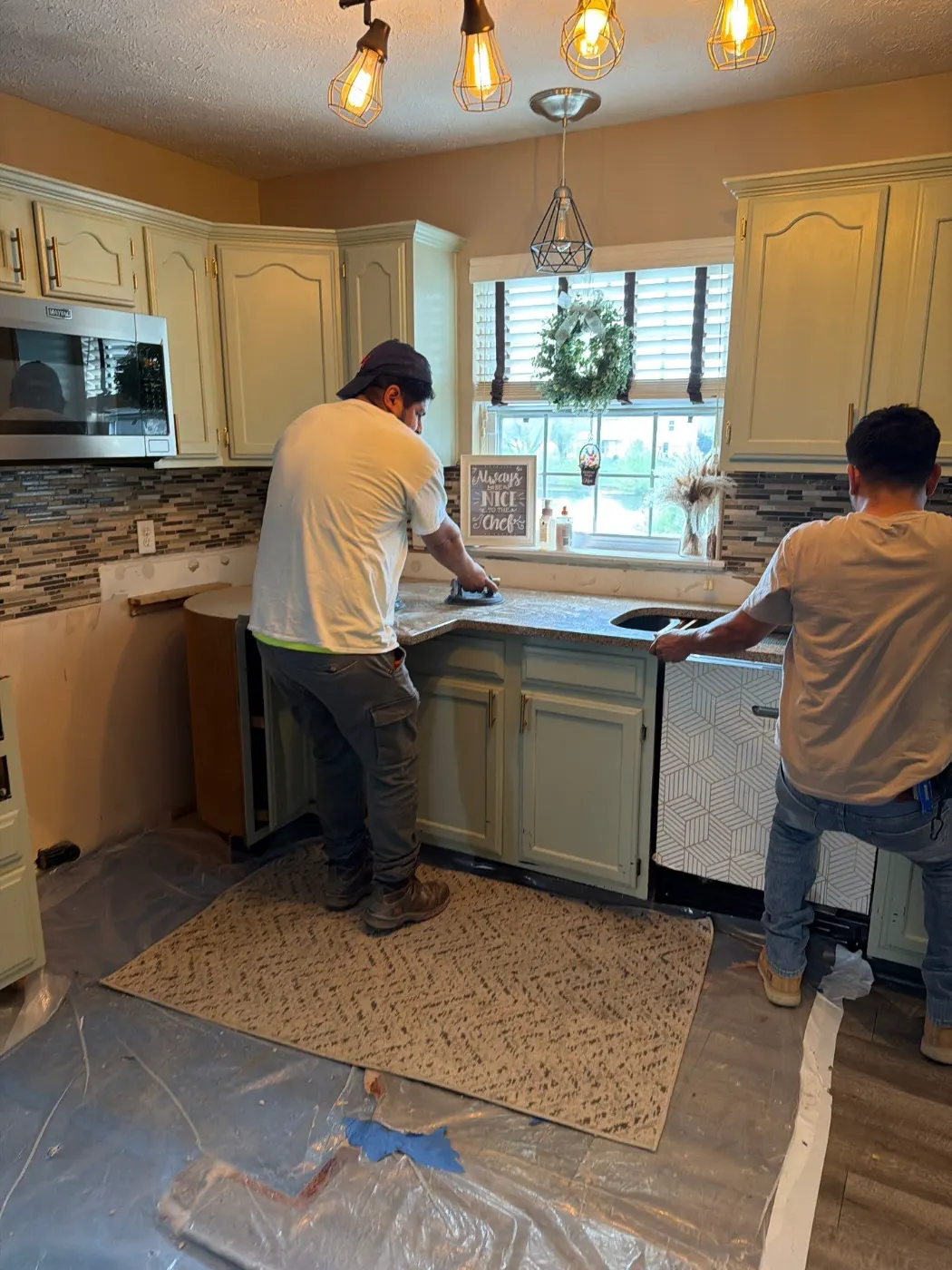
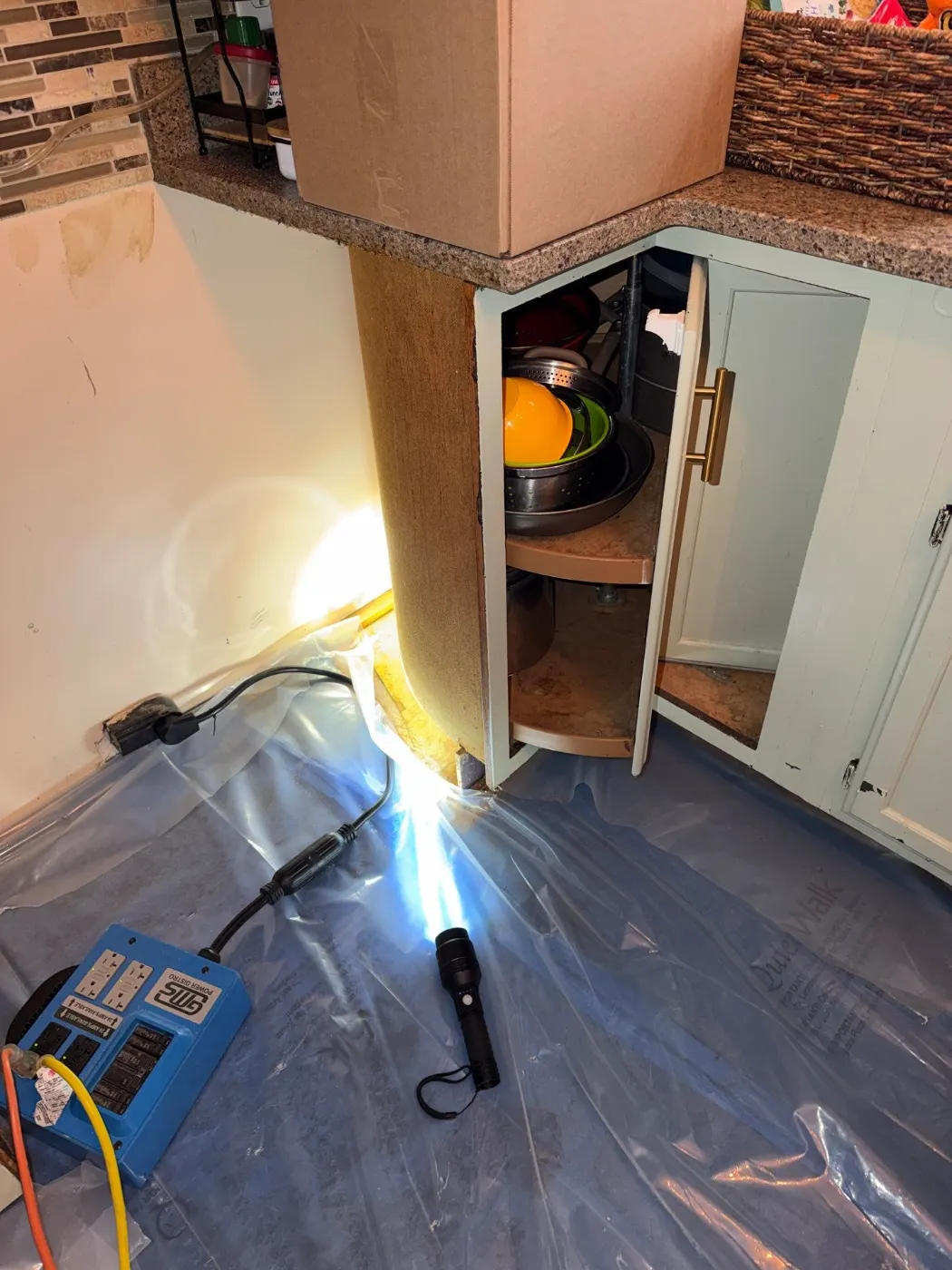
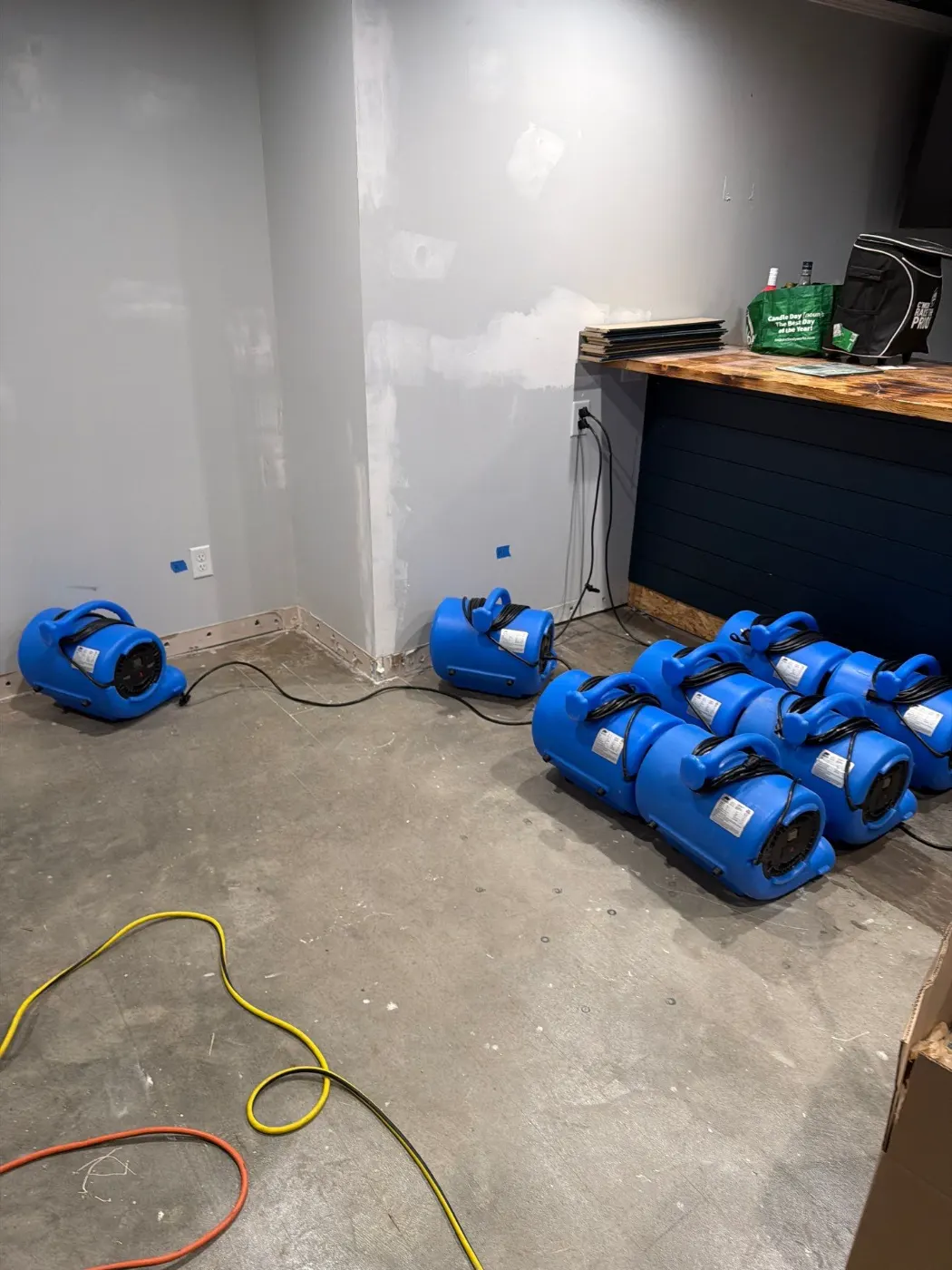
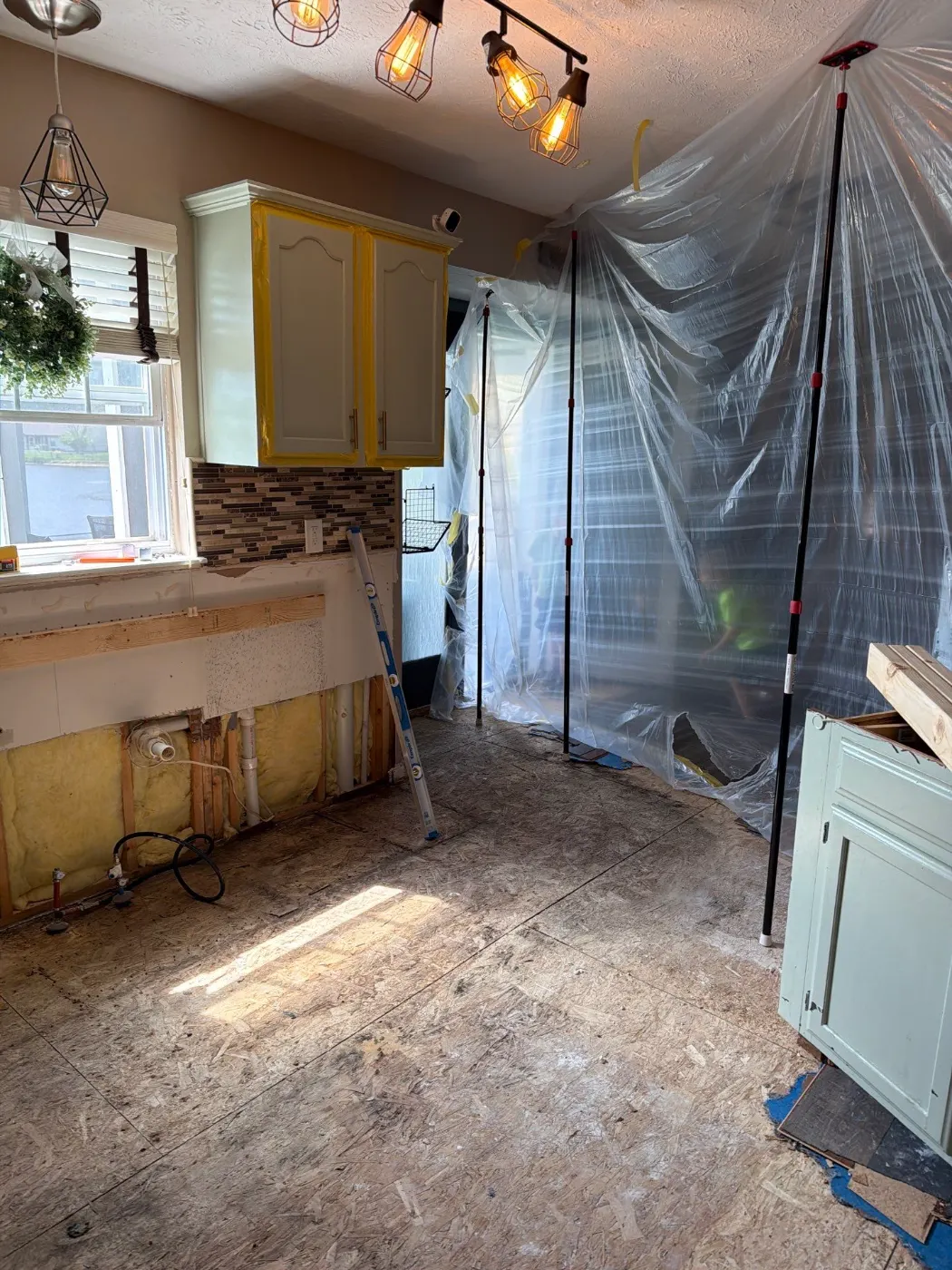
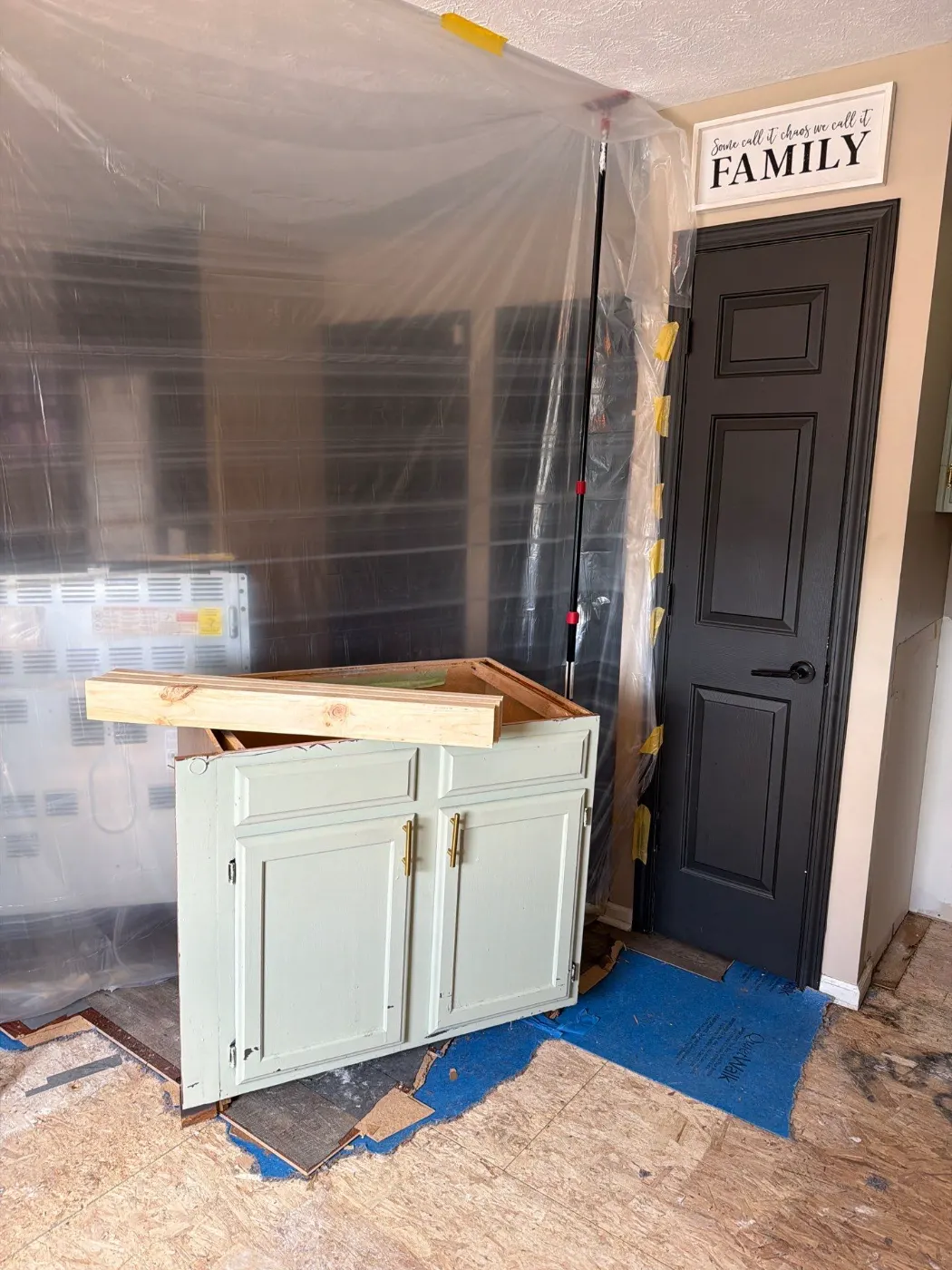
Real water damage jobs completed for Connersville homeowners and across Fayette County, from basement extractions to full reconstruction after Category 3 losses. Every project documented start to finish.

From the First Connersville Call to the Final Reading
The first phase on a Connersville job is moisture assessment and Category determination. A certified tech walks the property, runs thermal imaging across affected and adjacent areas, confirms readings with penetrating meters, and traces the water back to its source: a broken supply line, an appliance failure, a sewer backup, or storm intrusion through a foundation or opening. The water is then classified as Category 1, 2, or 3 per IICRC S500, and the full scope of damage is mapped before any drying equipment is positioned. This assessment typically takes one to two hours and sets the entire project up correctly.
Insurance coordination starts the same day. We photograph and video every affected area before mitigation begins, log moisture readings into a written map, and contact your insurance adjuster directly to walk through the scope. The mitigation work is justified per industry standard so the carrier understands what is being done and why. Most Connersville homeowners never have to assemble this paperwork themselves, we handle that side of the conversation with the carrier while you focus on your household. Coverage questions get raised early, not after the work is done.
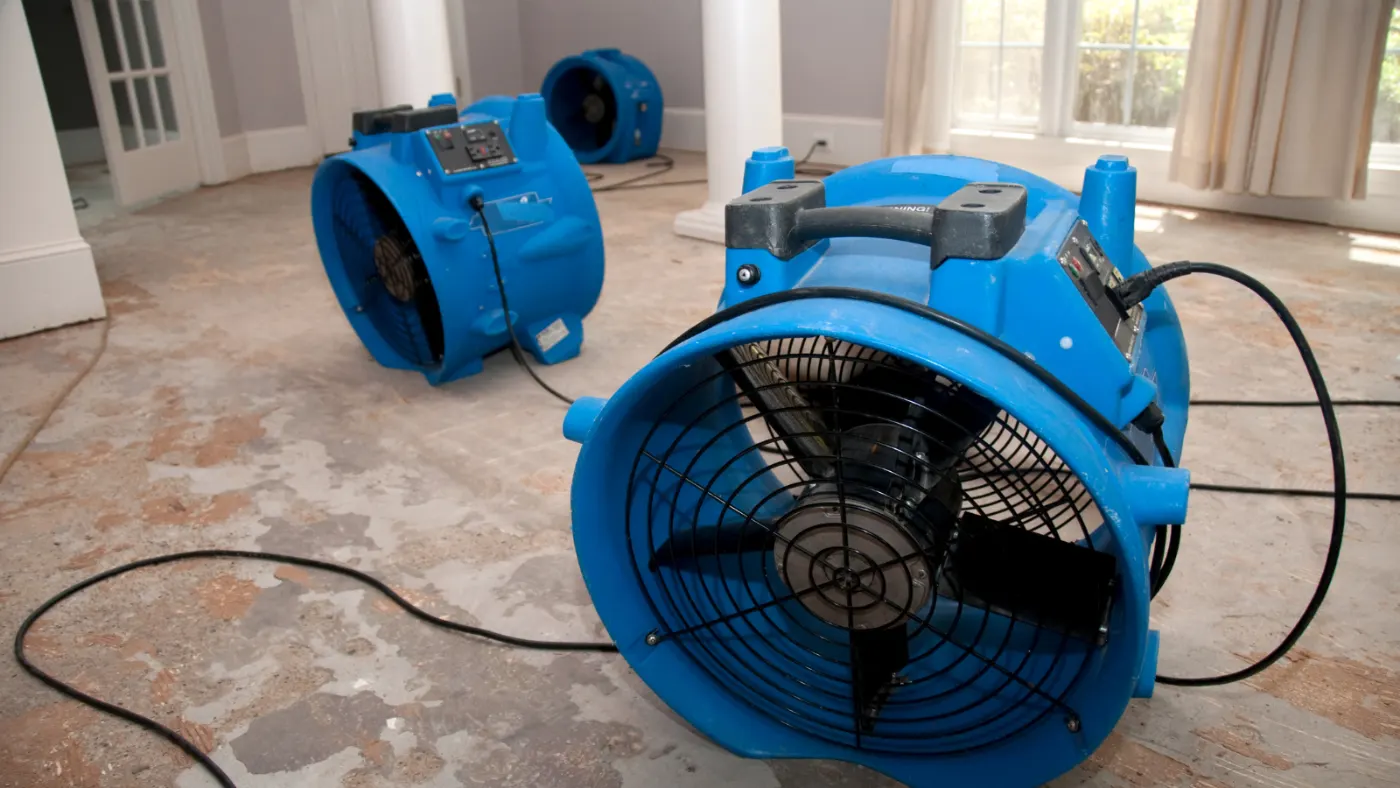
Drying execution comes next. Air movers and commercial dehumidifiers are placed using structural drying calculations matched to the affected square footage and materials involved. Daily monitoring captures meter readings on framing, subfloors, and drywall until everything reads at dry standard, meaning moisture content has returned to the level of unaffected materials in the same home. Controlled demolition is performed only where materials cannot be saved. Then reconstruction begins, drywall, insulation, flooring, paint, and trim, finishing the home back to pre loss condition.
Rapid Emergency Dispatch
When you call our 24/7 line, a crew is routed to your Connersville address with extraction equipment, dehumidifiers, air movers, and meters already loaded. A certified technician leads the response. Water removal begins as soon as the scene is safe and assessed, because every hour of delay grows the loss.
Category Determination
Per IICRC S500, water is classified before drying begins. Category 1 is clean supply line water, Category 2 is gray water from appliances or toilet overflows without solids, and Category 3 is sewage, floodwater, or long stagnant water. Readings and classification are logged in a written assessment that drives the entire scope.
Insurance Partnership
We work with your insurance carrier from the first day. Photos, moisture maps, and scope documentation are prepared the way adjusters expect, and the mitigation justification is matched to your coverage. Invoicing stays transparent, and there is no scope drift, just clean paperwork that moves your claim forward.
Verified Dry Standard
Drying is not finished when surfaces feel dry. It is finished when meter readings on framing, subfloors, and finishes match the unaffected materials in your home. Daily readings are logged through the dry out, and reconstruction does not start until those numbers confirm the structure is genuinely dry.
Common Water Damage Causes in Connersville
Connersville homes typically call us about these six water damage scenarios.
Appliance Failures
Dishwashers, washing machines, refrigerator ice maker lines, and water heaters fail without warning. Slow leaks behind appliances can run weeks before the wall behind them shows visible damage.
Roof Leaks After Storms
Wind-driven rain and hail damage shingles, flashing fails, and water tracks down attic rafters into the living space. Often invisible from the ground until ceiling stains appear days later.
Sump Pump Failure
The single most common call we get from Connersville homeowners. Power outage during a storm, pump motor burns out, or the float switch fails. By the time you notice, the basement has 2 to 6 inches of water.
Window Well Overflow
Water entering at a basement window soaks the wall it runs down and the floor at the base of it. Carpet pad, bottom plate, and the drywall behind the baseboard all read wet, so drying starts by removing what holds moisture against the framing.
Frozen Pipe in an Exterior Wall
Kitchen sinks on outside walls, second floor baths over unheated garages, and any run through a rim joist are the usual spots. Opening cabinet doors on the coldest nights and letting a fixture trickle costs nothing and prevents most of these.
HVAC Condensate Line and Pan
Condensate is clean at the start, then it drips into insulation and drywall and sits there in summer humidity. That combination moves it out of Category 1 quickly, which is why the ceiling assembly gets metered before anybody decides to paint over the stain.
What to Do Right Away When Your Connersville Home Takes On Water
In the first hour, close the main water valve if a pipe or appliance is leaking, and keep away from outlets and cords near the water. Then use the rest of this checklist to protect what you can while help is on the way.
1. Stop the source
For a toilet or a washing machine, close the small shutoff valve behind it. If the leak is bigger, or you can't tell where it starts, close the main valve for the whole house and leave it off until our crew checks the source.
2. Stay clear of anything electrical
Stay out of any room where water has reached outlets or extension cords. If the breaker panel is dry and you can reach it without standing in water, switch off the breakers for the wet area. If you can't reach it safely, call your electric utility.
3. Keep kids and pets out of dirty water
If a toilet or floor drain backed up, treat that water as dirty and keep children and pets away from it. Wear rubber boots and gloves if you have to walk through it, and wash your hands well afterward.
4. Move what you can't replace
Carry keepsakes and important papers to a dry room upstairs. Then pick up anything sitting on a wet floor, starting with cardboard boxes and anything made of paper, since those soak up water quickly.
5. Keep stains off the carpet
Metal furniture feet can rust, and wood finishes can bleed into wet carpet. A square of foil or a plastic container lid under each leg keeps both off the carpet, and it takes only a few minutes to do.
6. Leave wet drywall and carpet in place
It's tempting to start pulling things out, but leave wet drywall and carpet where they are. Our crew takes the damage photos and moisture readings before anything is removed, and that record goes into your photo report.
7. Let the air reach wet spots
In rooms with clean water, open closet and cabinet doors so air reaches the wet spots. On a hot, sticky day, keep the windows closed and leave the air conditioning on, since it pulls moisture out of the air.
8. Have a few details ready
It helps to know roughly when the water started and whether it's clean water from a pipe or dirty water from a drain. If you're unsure about either one, the crew sorts it out on site.
If you only get through the first two steps before help arrives, that's fine, since the water source and your safety come first. Call us when you're ready and we'll take it from there.
Three Simple Steps
This is what happens after you call us about water in your Connersville home, in the order it happens.
Trucks Roll
Ring the 24/7 line and a certified crew heads your way within 2 hours. The truck is packed for the job, not for the estimate.
Inspection Phase
Coverage questions get answered honestly, including the parts that are not covered. Nothing is assumed dry without a reading that says so.
Finished on Numbers
Controlled demolition only where materials cannot be saved, then restoration. Equipment stays until Connersville readings match unaffected structure, most often 3 to 5 days. The readings are what you show a buyer three years from now.
What You'll See in Your Water Damage Photo Report
A photo report puts what's inside your walls and floors in front of you in pictures and numbers. We build it from the first visit through the last day of drying, then go over it with you in plain language.
The source, in pictures
Whether it was a cracked pipe or a sump pump that quit, the first photos in the report show the source up close and in the context of the room around it. That helps your plumber see the same thing we saw.
What a thermal camera shows
A thermal camera picks up the cooler surfaces that wet materials leave behind. When the crew uses one, the images go in the report next to the meter readings that confirm what the camera found.
Pictures from start to finish
Photos go into the report at each stage of the job, starting with the damage the crew found when they first walked in. By the end, you have a visual history of the room from wet to dry.
Saving what can be saved
Drying in place is usually less disruptive than tearing out and replacing, and the readings show when it's possible. The report notes what the crew is drying in place and what it plans to remove, with photos of both.
The drying log
The report keeps a running log of the drying, with the readings from each visit and notes on the equipment in each room. It's the easiest way to see how close your home is to dry.
We walk you through it
Once the first readings are in, we sit down with you and go through the report in plain language. You can see what's going on inside your walls from your living room and ask about anything that doesn't make sense.
A record that's yours
Keep the report with your home records. We document damage with a photo report and walk you through what we found, so you can decide with your insurance company. Your policy will say what's covered, so read it before you call them.
The first photos and readings happen on day one, so call as soon as the water is off and everyone is safe.
Questions to Ask a Water Damage Company in Connersville
Use these questions with any water damage company you call in Connersville.
Does my policy require a certain company?
Ask your adjuster before you sign anything, and read the work authorization so you know what you're agreeing to.
What happens if you find mold?
Ask how mold behind walls or under floors gets handled, and whether that work is priced apart from the drying.
Who handles repairs after drying?
Ask who replaces drywall, flooring, paint and trim once the structure is dry, and whether one company can do both stages.
Who will be working in my home?
Ask whether the crew works for the company you called or for a subcontractor, and who's in charge on site each day.
How will you show me it's dry?
Ask for moisture readings on the first visit and the last one, so you can see the numbers reach dry standard.
Can I see an itemized estimate?
Ask for every line item in writing. Many insurers price water losses in Xactimate, so an estimate in that format is easier for an adjuster to review.
Indiana Weather Drives Restoration Calls Year Round
Indiana weather drives the water damage calls we take in Connersville. Spring rainfall saturates Fayette County soils and pushes water through basement walls, summer thunderstorms drop intrusion grade downpours in under an hour, and winter freeze thaw cycles burst supply lines in older plumbing without warning.
Spring Saturation Flooding
Heavy spring rainfall in the Whitewater River basin saturates Fayette County soils until water has nowhere to go but through foundation walls and basement floor joints. Connersville homes on lower lying streets see seepage that can turn into inches of standing water overnight. When called in, we extract, set containment, and begin structural drying before the moisture migrates into framing.
Winter Pipe Bursts
Indiana hard freezes hit older Connersville plumbing harder than newer construction, and a frozen supply line that lets go at 2 AM can release hundreds of gallons before the main is shut off. We arrive with extraction equipment ready, isolate the affected areas, and begin drying the structure the same day to limit damage to subfloors and lower level ceilings.
Summer Storm Intrusion
Convective summer thunderstorms can dump rainfall faster than gutters, grading, and storm drains can carry it away. Water finds its way through window wells, foundation cracks, and any compromised opening. Our response focuses on stopping ongoing intrusion at the entry point, then extracting and drying everything the storm pushed inside.
Ice Dam Backflow
When snow melt refreezes at roof edges during Connersville winters, water backs up under the roofline and finds its way into ceilings, exterior walls, and insulation. We do not perform roof work, but we do handle the interior water damage: removing saturated insulation, drying the wall cavities, and rebuilding the affected ceilings and finishes.
Local Connersville Streets, Local Experience
Every neighborhood listed here is part of our Connersville service area. Open one for notes on the homes there.
Where we respond near Connersville
Along with Connersville, our crews respond to the closest neighboring communities, 24/7.
Water Damage Risk in Connersville
What our crew looks for in Connersville homes.
About Connersville Homes
Connersville's housing stock is among the oldest in Indiana, with a median construction year of 1952 and approximately 32% of homes built before 1940, with another 14.6% built by 1949. Homes span from two story traditional structures dating to the late 1800s through 1920s bungalows and mid century ranch style houses, suggesting dominant plumbing eras of galvanized steel (pre-1950s builds) transitioning to copper (1950s,1980s builds), with very little PEX-era construction given that only about 3.3% of units were built after 2000. The housing stock is overwhelmingly detached single family homes (approximately 73.6% of units), with a mix of two story traditional homes, craftsman bungalows, and mid century ranches situated on hilly residential streets branching off Central Avenue. The rolling Whitewater River valley terrain and the prevalence of pre-1960s construction means full basements are common, particularly in the older downtown adjacent and north side neighborhoods, with detached single car garages typical throughout.
Where We Work in Connersville
We cover homeowners across Connersville near Roberts Park, Fayette County Courthouse, Canal House, Whitewater Valley Railroad Depot, Fayette County Public Library (Grand Avenue), Connersville Senior High School (Spartan Drive), Central Avenue Historic Downtown District, John Conner Nature Preserve.
Surrounding Areas We Serve
Our crew also covers Richmond, Brookville, Liberty, Metamora, Rushville, New Castle.
Recent Weather Patterns
Fayette County, which encompasses Connersville, is regularly included in National Weather Service flood watches tied to the Whitewater River basin, with saturated soils and excessive runoff producing recurring flooding of low lying and river adjacent properties. Indiana statewide has experienced 6 billion dollar flooding events since 1980, and the region's pattern of heavy spring rainfall, freeze thaw cycles, and summer convective thunderstorms with flooding downpours creates persistent water intrusion, sewer backup, and basement flooding risk across the city.
What Our Crew Sees in Connersville
Connersville's position along the Whitewater River and within a glacially carved river valley places many older residential streets and low lying neighborhoods in proximity to seasonal flood risk, with saturated soils accelerating basement seepage and crawl space flooding after heavy rains. The overwhelming concentration of pre-1960 housing means galvanized and early copper plumbing is prevalent throughout the city, creating elevated burst pipe and supply line failure risk during Indiana's hard freeze thaw winters. The city's aging municipal sewer infrastructure,serving a system established in the industrial era,combined with high housing vacancy rates (nearly 15%) means deferred maintenance and compromised sewer laterals are a widespread concern for both occupied and investor held properties.
The Connersville Area
Connersville has an estimated population of approximately 13,300 residents, with a median household income of around $34,201,placing it among the least affluent cities in Indiana. The community is primarily owner occupied (about 58,60% of units), working class and family oriented, with roughly 23,27% of residents living below the poverty line, meaning many homeowners carry deferred maintenance burdens that can amplify water damage severity.
How a Water Loss Gets Handled in Connersville Homes
What the equipment does, what containment is for, and who rebuilds.
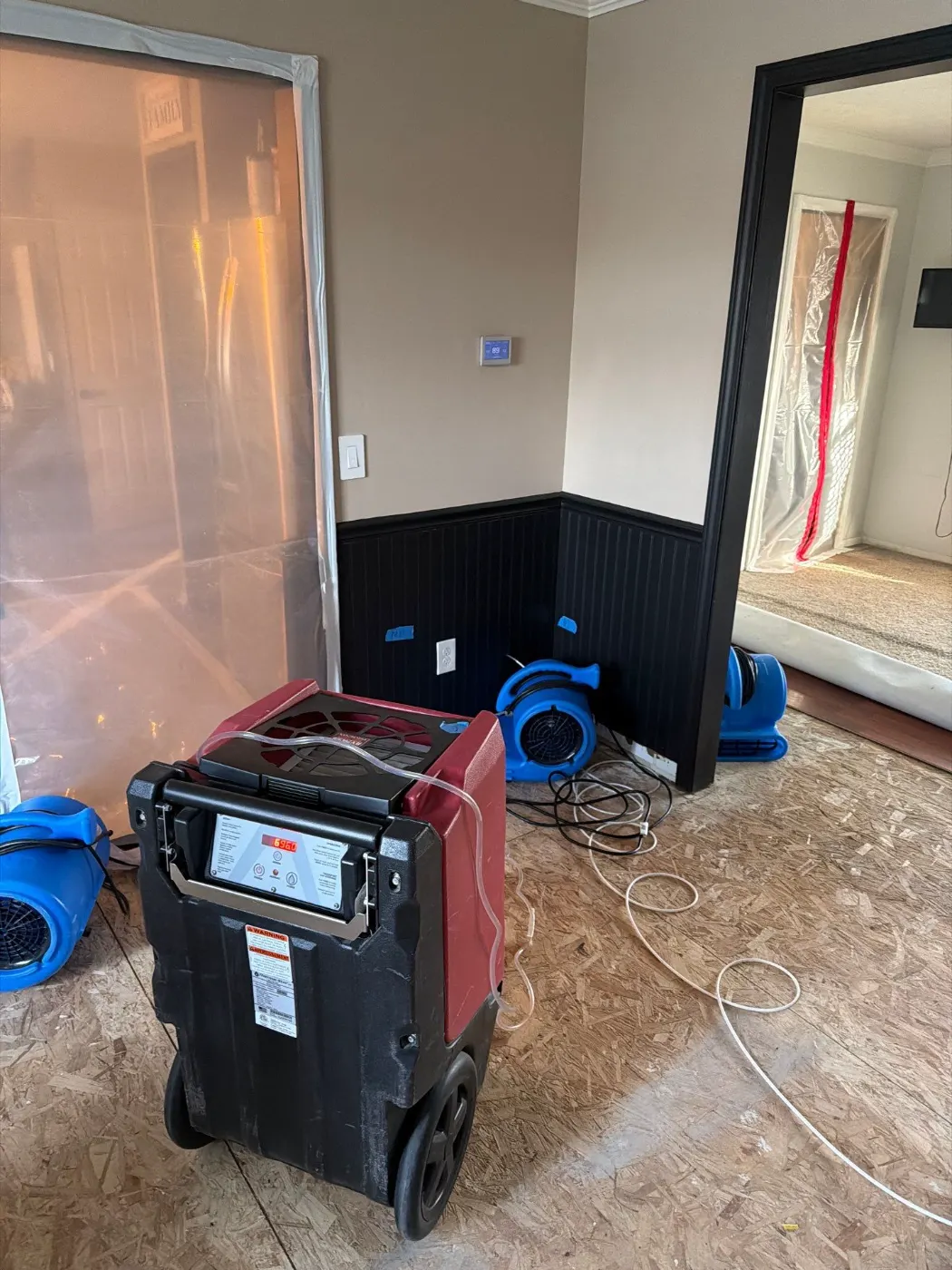
Emergency response in Connersville starts with what arrives on the truck. Commercial water extraction equipment pulls standing water from carpet, hard surfaces, and subfloors. Commercial dehumidifiers sized to the affected square footage start pulling moisture from the air the same day, while professional air movers push evaporation off saturated materials. Moisture meters and thermal imaging map where the water actually traveled, which is almost always farther than visible damage suggests. On Category 1 and Category 2 losses, structural drying setup is completed on the first visit, and daily monitoring with logged readings runs through the dry out. Work zones stay contained, plastic protection is hung between affected and unaffected areas, and you get a clear picture each day of what is happening, what reads dry, and what still needs time.
Specialized containment is the protocol when the loss is Category 3, sewage backup, floodwater, or long stagnant water with biological contamination, and when mold remediation per IICRC S520 is required. Six mil plastic barriers are hung floor to ceiling around the work zone with entry points sealed. Negative air machines pull contained air through HEPA filtration before exhausting it, so contaminants do not migrate into clean parts of the home. Technicians work in full PPE, Tyvek suits, N95 or P100 respirators per S520, nitrile gloves, and eye protection. Contaminated materials are cut and bagged for disposal. Antimicrobial is applied to remaining structure, and when warranted, post remediation verification with air sampling confirms the space is clean. This is the phase where IICRC training matters most. Corner cutting here is what causes long term health problems for the people who move back in.
Reconstruction is the rebuild phase, and the same company that performed extraction and drying handles it. Drywall is hung, taped, mudded, sanded, primed, and painted. Flooring is replaced, carpet pad and carpet, vinyl plank, hardwood refinishing, or tile reset. Trim and baseboards are reinstalled or replaced where saturation required removal. Cabinetry damaged in the loss is repaired or replaced. Doors are rehung and adjusted, and any electrical or plumbing finish work tied to the rebuild scope is coordinated. The structure is one project from start to finish: one scope of work tracked from the initial call through the final walk through, one project manager you talk to, one schedule, one final invoice. You are not handing your home off to a second contractor after the dry out and waiting weeks for the rebuild to start.
What to Expect While Drying Equipment Runs in Your Connersville Home
You can usually stay home in the days after extraction while the equipment pulls moisture out of your floors and walls. Your part is mostly keeping things the way the crew set them up, and the notes below cover what homeowners ask about during those days.
Expect steady noise
Air movers sound like strong box fans, and dehumidifiers add a low hum. A closed door between a bedroom and the equipment helps at night, and the crew can sometimes angle a unit away from a bedroom wall if the noise carries.
Leave it where the crew set it
Each air mover is aimed at a specific wall or section of floor. Leave the units where they are and keep them running overnight. If one needs to move, call us and the crew will reposition it.
The thermostat setting
Drying moves faster in a warm room, so the crew may ask you to keep the heat at a normal setting even in mild weather. Ask the crew before you turn the heat or the air conditioning way down.
Keep cords clear
Cords run along the floor between the outlets and the equipment. Leave them where the crew routed them, and keep rugs and furniture off the cords so they stay cool and easy to see.
Plastic walls stay up
If the crew hangs plastic sheeting to close off part of a room, it's there to keep dust and moisture contained. Leave the zipper doors closed, and keep curious pets from scratching at the plastic.
Tell us what you notice
You live in the house, so you'll notice changes between visits, like a new stain or a smell that wasn't there before. Mention them on the next visit, or call us if something seems wrong.
If you're worried about mold
CDC doesn't recommend mold testing, and EPA says homeowners can usually clean moldy areas under about 10 square feet themselves. If you see or smell mold during the dry out, point it out to the crew on their next visit.
Finishing the dry out
Drying wraps up room by room, so some units may leave before others. When the last readings come back dry, the crew removes the rest of the equipment and walks the house with you.
The crew will walk you through the setup on the first day, and you can call us with questions until the last unit leaves your Connersville home.
Sources: CDC, About Mold · EPA, A Brief Guide to Mold, Moisture and Your Home
Water damage response pricing in Connersville
Every water damage loss in the Connersville market is priced after a free on site inspection, because Category, square footage, materials affected, and reconstruction scope all move the number. The ranges below reflect what most Connersville jobs run, with your final pricing set after the assessment.
Common Questions About Our Connersville Work
What to expect, in plain answers to the questions Connersville homeowners ask us most.
Expert Connersville Restoration Crews Available Now
If water is spreading through your Connersville home right now, or you suspect hidden moisture from a past loss, our 24/7 emergency line dispatches crews fast. Free inspection, no obligation, and we coordinate directly with your insurance carrier so the claim moves forward cleanly.